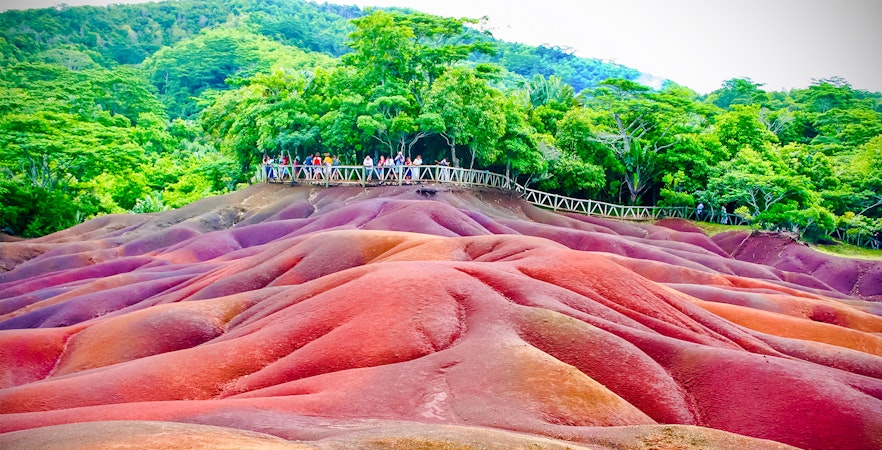
This is why you’re here. The rolling dunes glow in seven natural shades, thanks to volcanic minerals that refuse to blend—even after rain. Walk the elevated platforms and watch the colours shift with the sunlight. It’s geology, but make it art.

Chamarel Seven Coloured Earth is one of Mauritius’ most unusual natural sights. Hidden in the island’s lush southwest hills, this small geopark is famous for its rainbow-coloured sand dunes, dramatic waterfall viewpoints, and giant tortoises wandering beneath tropical forest.
At first glance, the dunes at Chamarel almost look painted. Waves of red, violet, and golden sand ripple across the landscape, standing out against deep green forest and distant mountain ridges.
But the colours here aren’t artificial — they’re the result of ancient volcanic activity.
Millions of years ago, lava cooled and slowly broke down into mineral-rich soil. Iron and aluminium oxides reacted with air and moisture over time, creating the distinct colours you see today. The most fascinating part? Even when the soil is disturbed or washed by rain, the colours settle back into separate layers rather than blending together.
Exploring the park is simple and relaxed:
Compact, scenic, and easy to explore, Chamarel offers a quick but memorable glimpse into the geological story of Mauritius.
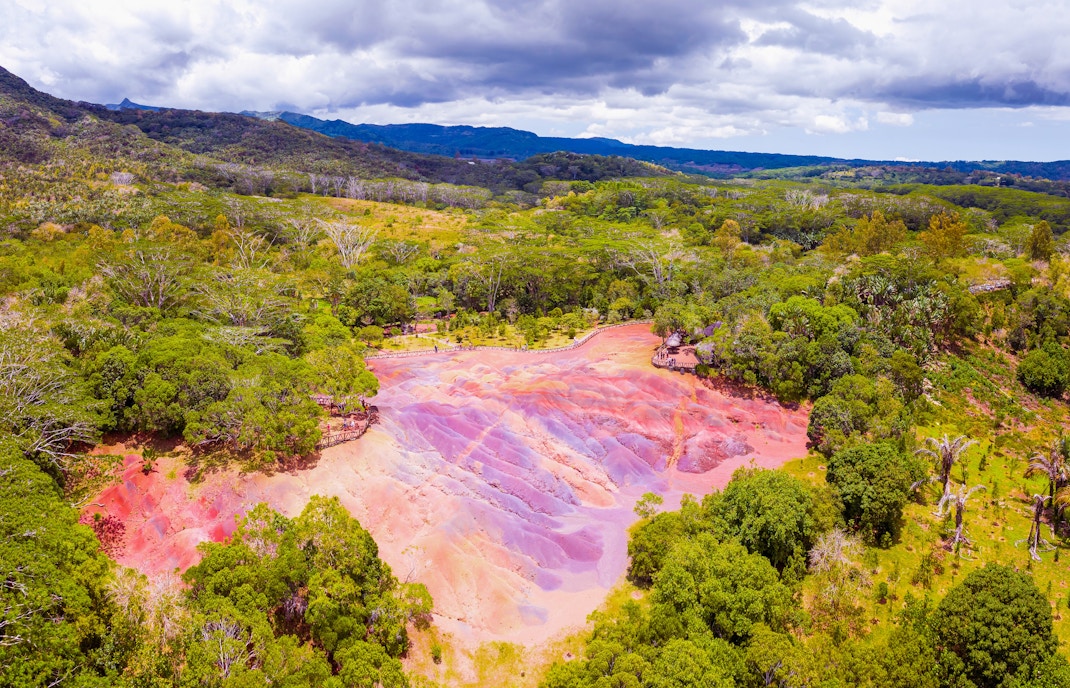
This is why you’re here. The rolling dunes glow in seven natural shades, thanks to volcanic minerals that refuse to blend—even after rain. Walk the elevated platforms and watch the colours shift with the sunlight. It’s geology, but make it art.
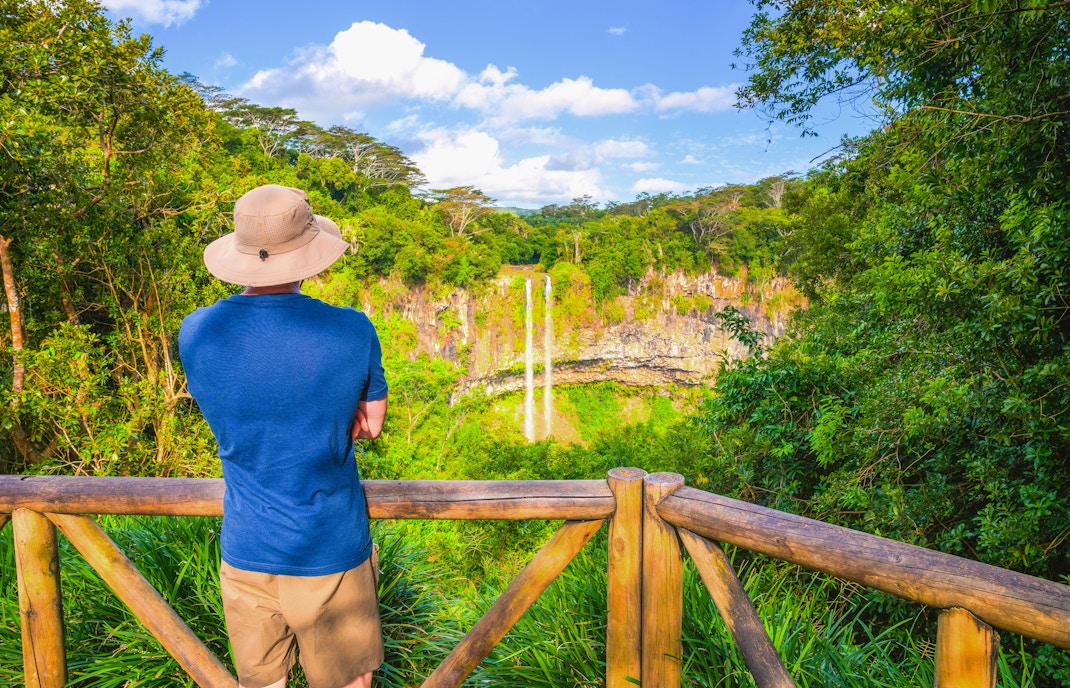
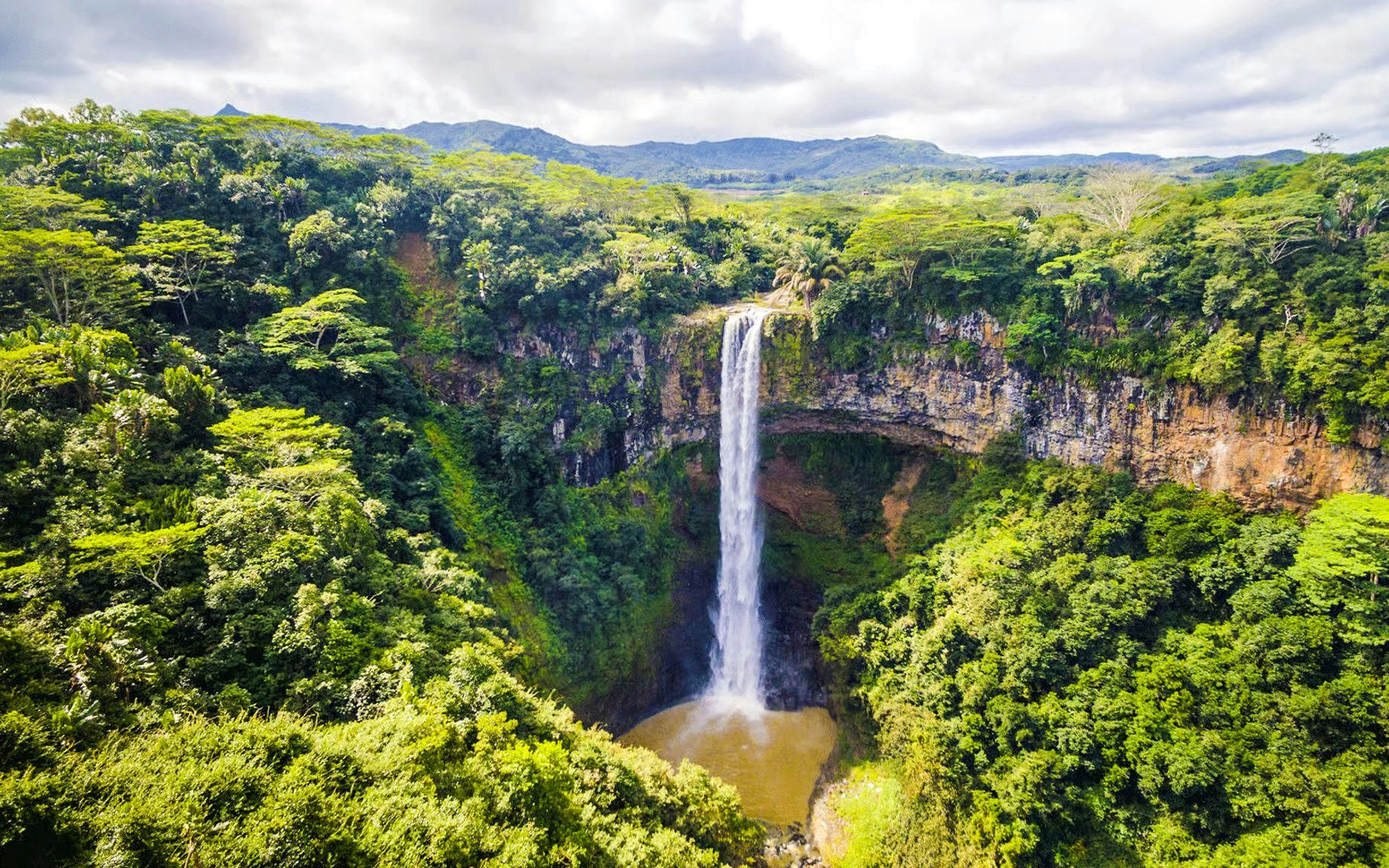
Before you reach the dunes, you’ll stop at Chamarel Waterfall—Mauritius’ tallest single-drop cascade. It plunges nearly 100 meters into a lush gorge below. The viewing deck gives you a clear, dramatic angle, and yes, it’s every bit as photogenic as you’d expect.

Inside the park, you’ll meet Aldabra giant tortoises—slow-moving, gentle, and surprisingly fascinating. These are among the largest tortoises in the world. Watch them roam their shaded enclosure and take your time. It’s a simple moment, but one you’ll remember.
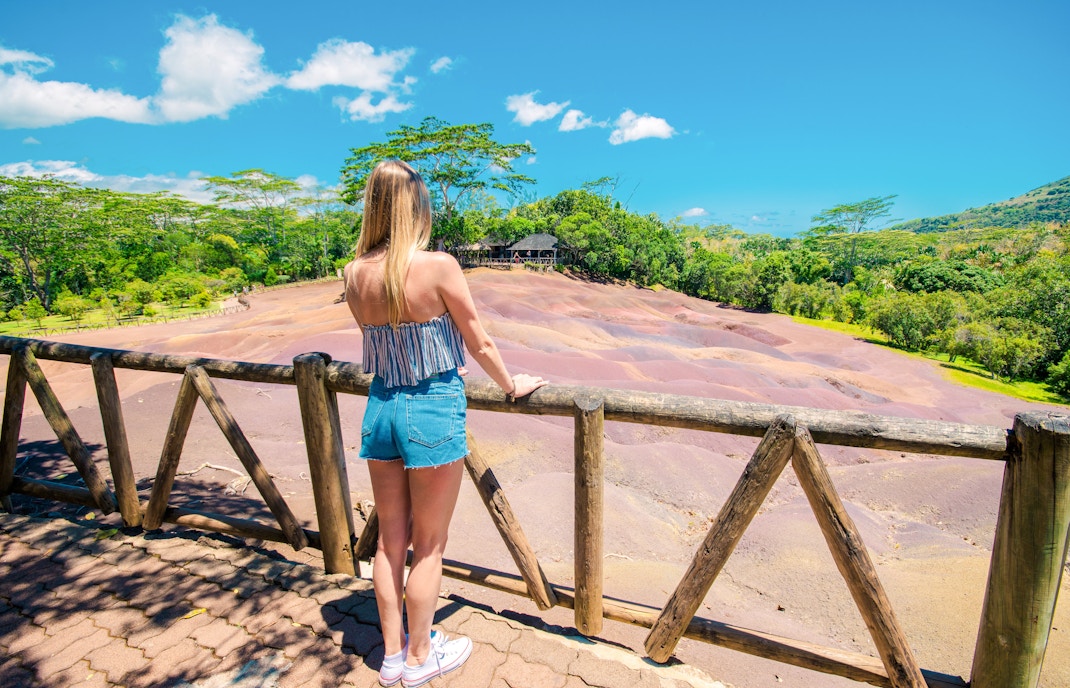
A wooden boardwalk loops around the dunes, guiding you to multiple vantage points. You get sweeping views of the colourful formations framed by dense green forest. It’s easy to explore, thoughtfully designed, and perfect for soaking it all in without disturbing the terrain.

Overlooking the valley near the geopark, Le Chamarel Restaurant serves authentic Mauritian Creole cuisine in a setting that’s hard to beat. Expect local flavours, fresh ingredients, and wide-open views. It’s the kind of lunch stop where you linger a little longer.

Before you leave, stop by the small on-site shop for locally made coffee, spices, and handcrafted keepsakes. It’s not flashy, but it’s thoughtful—an easy way to take a little piece of Chamarel home with you.
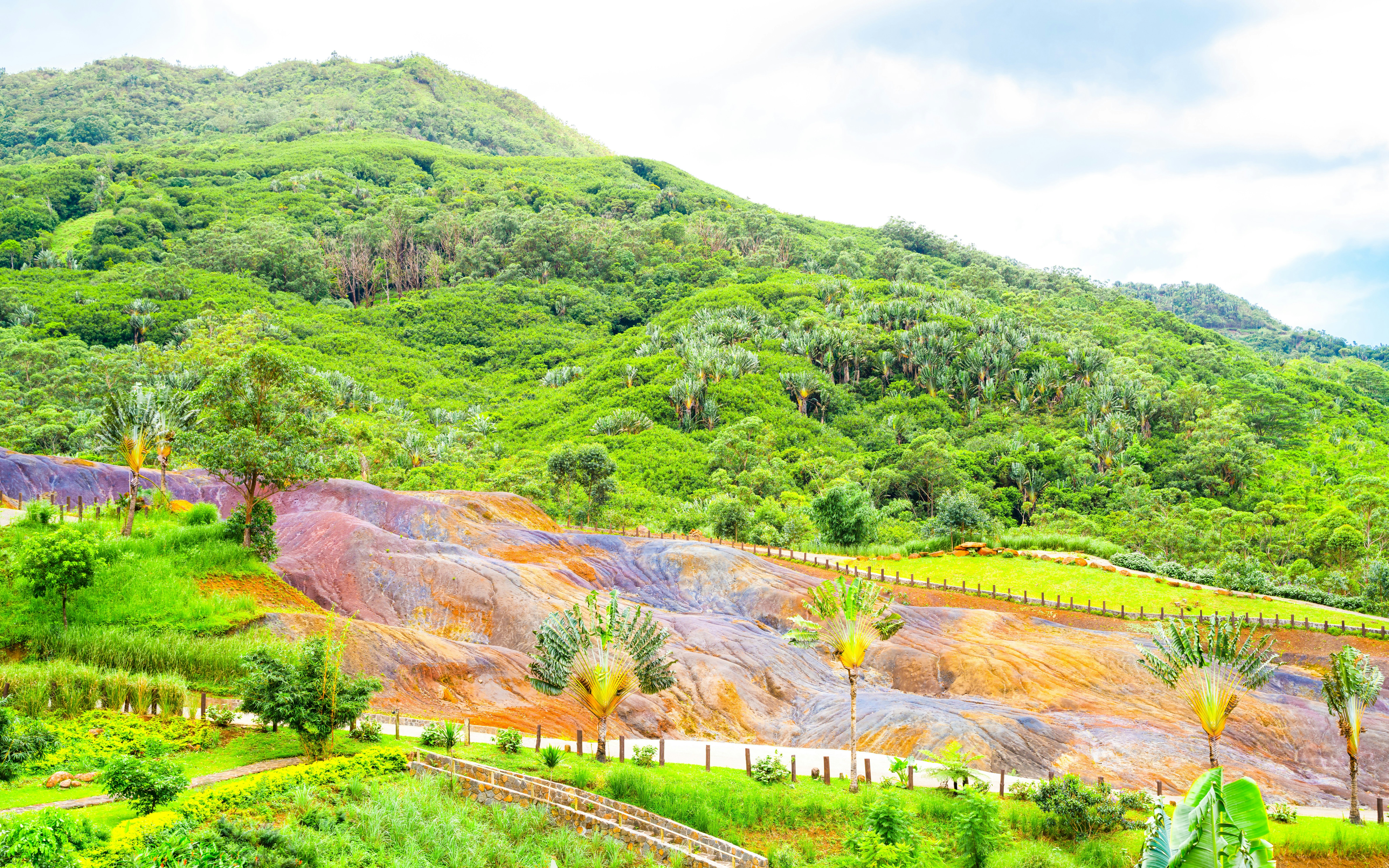
Rainbow-hued volcanic sand formations shaped by mineral-rich basalt soils.

The coloured dunes of Chamarel formed millions of years ago from volcanic basalt that slowly weathered into mineral-rich soil. Over time, iron and aluminium oxides reacted with air and moisture, producing the distinct colours visible today.
Although the formation had long been known locally, it was officially documented in 1879. Tourism development followed in the mid-20th century, and the site opened to visitors in the 1960s as Mauritius began promoting its natural attractions.
Today, the dunes sit within the Chamarel Seven Coloured Earth Geopark, a protected area designed to preserve the fragile geological formation while allowing visitors to explore it safely.
The colours come from mineral oxides in volcanic soil. Iron and aluminium compounds react with air and moisture, creating the red, brown, violet, blue, green, and yellow tones visible in the dunes.
Most visitors spend around one to two hours exploring the geopark. This allows enough time to see the waterfall viewpoints, walk around the dunes, and visit the tortoise enclosure.
No. The dunes are protected to preserve their delicate geological structure. Visitors observe them from boardwalks and viewing platforms around the formation.
Yes. The waterfall viewpoints are located along the route to the geopark and are usually the first stop before reaching the coloured earth dunes.
Morning visits usually offer the best lighting and fewer crowds. The colours of the dunes also appear more vibrant in bright sunlight.
Yes. The dunes are a naturally occurring geological formation created by volcanic activity millions of years ago. The mineral-rich soil separated over time to form distinct coloured layers.
The sand grains have different densities and repel one another, which prevents the colours from blending—even after heavy rainfall.
While commonly referred to as seven colours, the dunes can display even more subtle shades depending on the sunlight and viewing angle.
The formation dates back millions of years and is linked to Mauritius’ volcanic origins, making it one of the island’s most unique natural sites.
Yes. The dunes maintain their colours throughout the year, though bright sunlight enhances their vibrancy.
Yes. The dunes are protected within a geopark to preserve their fragile geological structure and prevent erosion.
Chamarel 7 Coloured Earth Entry Ticket
Chamarel 7 Coloured Earth Entry + Coffee Plantation Guided Tour & Tasting
Private Southwest Tour with 7 Coloured Earth and Crocodile Park
Private Southwest Tour: 7 Coloured Earth + Rhumerie Tour & Tasting